

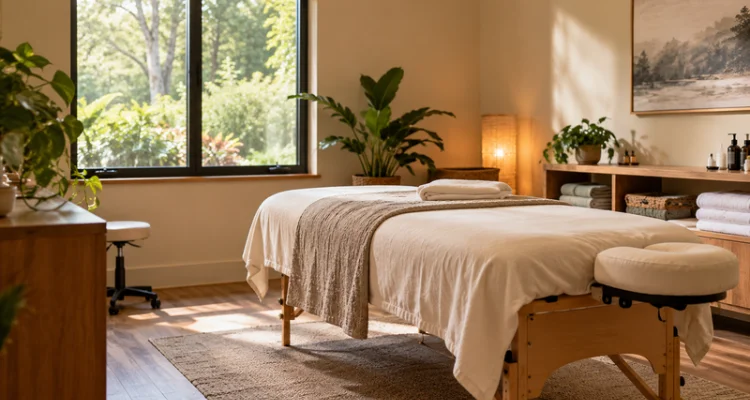
Massage therapy and bodywork don’t fit neatly into a standard office rental. A treatment room needs a sink, space for a table, and surfaces that can be wiped down between clients, not just four walls and a desk. Wynhaven Wellness Community Center offers treatment rooms built specifically for hands-on practitioners across Dawsonville, Cumming, and the wider North Georgia area. Here’s what to check before you sign anything.
Key takeaways
- A treatment room is not an office with a table added. Plumbing, flooring, ventilation, and storage needs set it apart from a standard desk-based rental.
- Demand for treatment space is rising with the field itself. Massage therapy employment is projected to grow much faster than average through the next decade.
- Georgia doesn’t license massage establishments at the state level. Room and facility requirements typically fall to local county or city permitting, not the state board.
- Water access matters more than most renters expect. A sink for handwashing and cleanup between sessions is a baseline need, not a bonus amenity.
- Flooring and surfaces need to survive oil and lotion. Carpet and unsealed wood absorb product and odor in a way hard surfaces don’t.
- Shared rooms require real scheduling discipline. Table setup time and turnover between practitioners need an actual system, not an assumption.
- Storage is easy to overlook and hard to live without. Linens, oils, and equipment need secure, dedicated space, not a shared closet.
- A good tour answers questions a listing never will. Sound, smell, water pressure, and flow between rooms are things you have to check in person.
What makes a treatment room different from a standard office rental?
A treatment room is built around hands-on, product-based work, not conversation and a desk. That means sink access, enough floor space for a massage table and clear movement around it, surfaces that can be sanitized between clients, and ventilation that handles oil, lotion, and cleaning product odors. A standard office rental, even a nicely furnished one, usually has none of these built in.
Many massage therapists learn this the hard way after signing a lease built for a different kind of practice. A room designed for talk therapy or coaching might look clean and professional in photos, but it was never set up for table work, product storage, or the cleanup routine a massage session actually requires. Retrofitting that kind of space after the fact, adding a sink line or swapping out flooring, is rarely something a landlord will approve, let alone pay for.
If you’re comparing treatment rooms to standard office rentals, our team can walk you through what’s actually built into a space at Wynhaven.
Essential features every treatment room needs
- Table space and clearance. You need room for a full-size massage table plus clear space to move around all four sides without bumping a wall or cabinet.
- Sink or water access. Handwashing between clients is standard practice, and a sink in or near the room saves time a hallway restroom doesn’t.
- Ventilation and odor control. Oils, lotions, and cleaning products build up fast in a closed room without real airflow.
- Easy-to-sanitize flooring. Hard or sealed flooring wipes clean between sessions, while carpet holds odor and is harder to keep sanitary.
- Secure storage. Linens, oils, and equipment need a dedicated, lockable space, not a shared closet you’re competing for.
- Sound privacy. Clients often talk during a session, and a thin wall or shared space undercuts the calm the work depends on.
- Temperature and lighting control. Clients are frequently undressed or under a sheet, so a room that runs cold or has harsh overhead lighting works against the experience.
None of these features are optional extras you can work around later. Skipping even one, water access most often, tends to resurface as a daily friction point once you’re actually seeing clients, rather than something you can fix with a quick workaround.
Not sure which features matter most for your specialty?
Get in touch with our team to tour a treatment room built for hands-on work at Wynhaven.
Treatment room vs. standard office space: what’s different
The gap between a treatment room and a general office rental shows up the moment you start setting up for a client. Here’s where they diverge.
| Factor | Standard office space | Treatment room |
|---|---|---|
|
Water access
|
Shared restroom only
|
Sink in or near the room
|
|
Flooring
|
Carpet, typical office finish
|
Hard, sanitizable surface
|
|
Ventilation
|
Standard HVAC
|
Odor-conscious airflow
|
|
Floor space
|
Desk and chairs
|
Table clearance on all sides
|
|
Storage
|
Small closet or none
|
Dedicated linen and product storage
|
|
Sound privacy
|
Thin walls, open layout
|
Built for client conversation during sessions
|
Seeing the gap between what you have and what you need?
Reach out to our team to tour a treatment room at Wynhaven.
Questions worth asking before you sign
A short list of direct questions during the tour tends to surface far more than a listing page ever will. Ask who else uses the room and on what schedule, whether the sink and storage are exclusive to your bookings or shared, and what the actual process looks like if you need to add a day later. Ask, too, what happens if a session runs long. A space with no buffer between bookings can quietly turn a single late client into a scheduling problem for the rest of your day.
What local licensing and permitting actually covers
Individual massage therapist licensing in Georgia runs through the Georgia Board of Massage Therapy, but the board doesn’t license massage establishments or inspect treatment rooms directly. That responsibility typically falls to local county or city permitting authorities. In practice, that means the space you rent needs to meet local business licensing and health and safety requirements, not just the Board’s requirements for your personal license. Before you sign a lease, ask the space directly whether it already holds the local permits a treatment room needs, since sorting this out after you’ve committed clients to a schedule is far more disruptive than confirming it upfront.
This is worth asking about even when a space looks move-in ready. A room can have every physical feature a treatment space needs and still lack the local permitting your practice depends on, so get confirmation in writing rather than assuming it’s covered.
It’s also worth asking whether the space has handled this question for other practitioners before. A location that already hosts several licensed massage therapists or bodyworkers has typically already worked through local permitting requirements, which can save you from navigating an unfamiliar process on your own. That track record is one more thing worth asking about during a tour, right alongside the physical features of the room itself.
Treatment room rental models compared
Treatment rooms come in a few common arrangements, and the right one depends on how often you actually need the space.
New practitioners often start with an hourly or shared arrangement to test demand before committing to a dedicated room, then move to a private setup once their schedule fills in. There’s no requirement to pick one model and stick with it forever, so it’s worth asking whether a space allows you to shift arrangements as your caseload grows rather than locking you into a single option from day one.
| Rental model | How it works | Best for |
|---|---|---|
|
Private dedicated room
|
One room reserved exclusively for you
|
Full caseloads, consistent weekly schedules
|
|
Shared rotating room
|
Multiple practitioners share one room on a schedule
|
Light or part-time caseloads
|
|
Hourly or per-session
|
Book and pay only for the time you use
|
Occasional clients or testing a new space
|
|
Mobile with a home base
|
Travel to clients, use a rented room for select sessions
|
Practices that mix in-home and in-studio work
|
Trying to figure out which model fits your caseload?
Connect with our team and we’ll help you match the right setup at Wynhaven.
Red flags to watch for when touring a treatment room
A few warning signs are worth walking away from. No sink or water access anywhere near the room means you’ll be improvising cleanup between every client. Carpet or soft flooring in a room meant for oil-based work is a maintenance problem waiting to happen. Vague answers about who else uses the room and when suggest a scheduling system that doesn’t actually exist yet.
A strong lingering odor during the tour, even if someone explains it away, usually means ventilation isn’t doing its job. Trust what you notice in the room over what a listing description promises, and don’t be shy about asking to see the room at the same time of day you’d actually be using it.
It’s also worth asking how cleaning and linen turnover are handled between sessions, especially in a shared room. A space that expects you to supply, launder, and store your own linens has a different cost structure than one that includes laundry service, and that difference should factor into how you compare rental rates. If no one can give you a straight answer about cleaning responsibilities, treat that as a sign to ask more questions before signing anything.
Finally, pay attention to how the space handles client flow and parking, particularly if you expect back-to-back appointments. A beautiful room attached to a confusing building layout or limited parking can quietly cost you clients who simply give up trying to find you, so walk the full path a client would take before deciding the room itself is the only thing that matters.
Finding the right treatment room for your practice
A good way to narrow the search is to walk through a typical client session in your head before you ever tour a space. Picture where you’d greet a client, where linens and oils live within reach, how you’d move around the table, and where cleanup happens between appointments. Any room that makes that sequence harder than it needs to be, no matter how nice it looks, is probably not the right fit, and a short mental walkthrough like this can save you from a lease you regret.
The right treatment room should solve problems a standard office rental creates, not just repeat them in a nicer package. Wynhaven Wellness Community Center was built with these details in mind, from water access to sanitizable surfaces, on a nature-forward campus along the Forsyth-Dawson county line. Rooms are set up for massage therapists, bodyworkers, and somatic practitioners who need space built around hands-on work, not retrofitted for it. Whether you need a private dedicated room or a flexible shared arrangement, the goal is a space that supports the work rather than working against it. If you’re ready to find a treatment room built for what you actually do, reach out to our team. We’ll walk you through current availability at Wynhaven.
Frequently asked questions
What's the difference between a treatment room and a massage therapy office?
The terms are often used interchangeably, but a true treatment room includes water access, sanitizable flooring, and space built for a massage table, while an office rental may only offer a desk and chairs. Confirm the specific features included before assuming either term guarantees what you need.
Does a treatment room need its own sink?
A sink in or near the room is strongly preferred for handwashing and cleanup between clients, even if it's not always a strict legal requirement. Ask directly whether water access is in the room itself or down the hall.
Who regulates treatment room requirements in Georgia?
Individual therapist licensing runs through the Georgia Board of Massage Therapy, but establishment and room requirements typically fall to local county or city permitting authorities. Check with your specific space about what local permits are already in place.
Can I share a treatment room with other practitioners?
Yes, shared rotating rooms are common and work well for part-time or lighter caseloads, as long as the scheduling system actually prevents overlap. Ask how booking conflicts are handled before committing to a shared arrangement.
What flooring is best for a massage treatment room?
Hard, sealed flooring that can be wiped down and sanitized between clients is generally preferred over carpet, which absorbs oil, lotion, and odor over time. This matters more in a treatment room than in a typical office rental.
How much space does a treatment room need?
You'll generally want enough room for a full-size massage table plus clear space to move around all four sides comfortably. Cramped clearance makes certain techniques difficult and can affect both your work and the client's comfort.
Is a treatment room more expensive than a standard office rental?
Pricing varies by market and specific amenities, but treatment rooms are often comparable to office rentals once you account for features like water access and proper flooring that a standard office doesn't include. Reach out to our team for current rates at Wynhaven.
How do I get started finding a treatment room for my practice?
Reach out to our team to talk through your caseload and specialty, and we'll help you find a treatment room setup that actually fits your work. We'll also walk you through current availability at Wynhaven.

Wendy Skinner, BSN, RN, VABC
Wendy writes about community wellness, practitioner support, and restorative spaces, drawing on 15+ years of clinical experience and her experience building environments that foster healing, rest, and connection.