

Ready to find the right space for your practice?
Key takeaways
- Coworking is built for laptops, not client care. Most coworking spaces are designed around desks and meeting rooms, not one-on-one confidential sessions.
- The industry is growing fast, which adds to the confusion. With thousands of new coworking locations opening nationwide, it’s easy to assume flexible space means one thing.
- Privacy is the clearest dividing line. Wellness office space is built around soundproofing and dedicated rooms, while coworking space usually isn’t.
- Environment shapes client trust before a word is spoken. Research on therapy office design shows the physical space itself affects how safe and open a client feels.
- Community matters, but the right kind matters more. A coworking lounge full of unrelated businesses isn’t the same as a peer network of complementary practitioners.
- Coworking can work for non-client-facing work. Admin days, business calls, or telehealth-only sessions are often a better fit for generic coworking than in-person client work.
- Cost comparisons need to include privacy features. Some coworking spaces add soundproofing or private rooms for healthcare tenants, and that usually shows up in the price.
- The right choice depends on what actually happens in the room. A desk-based side project and a confidential client session have very different space requirements.
What’s the real difference between coworking space and wellness office space?
Coworking space is built for general business use: desks, laptops, meeting rooms, and networking among unrelated businesses. Wellness office space is built specifically around one-on-one client care, with private rooms, sound management, and an atmosphere suited to therapy, bodywork, or coaching sessions. Coworking has grown into mainstream infrastructure, with more than 9,400 coworking locations open across the US as of mid-2026, which is exactly why so many practitioners now assume it’s a natural fit for a wellness practice too. The difference isn’t just branding. It shows up in the floor plan, privacy measures, atmosphere and the way shared areas are used.
If you’re weighing the two for your own practice, our team can walk you through what a purpose-built wellness suite actually includes. Reach out to explore options at Wynhaven.
Privacy and confidentiality: the biggest gap
Confidentiality is not optional in therapy, coaching, or bodywork, and it depends on more than a closed door. Open floor plans, glass-walled meeting rooms, and shared hallways mean voices carry and clients are visible to people who have nothing to do with their session. Some coworking spaces now offer private rooms or features intended for confidential work, but the level of privacy varies significantly by location, which is a sign of real demand, but it’s an add-on to a space built for something else. A wellness suite at Wynhaven is designed around that requirement from the start, not adapted to it after the fact.
This matters beyond the session itself. Clients often disclose sensitive information in the moments right before or after a session too, in a waiting area or hallway. A space that hasn’t been designed with those transition moments in mind can undo the privacy of the session that just happened, even if the room itself was soundproofed.
Atmosphere and client experience
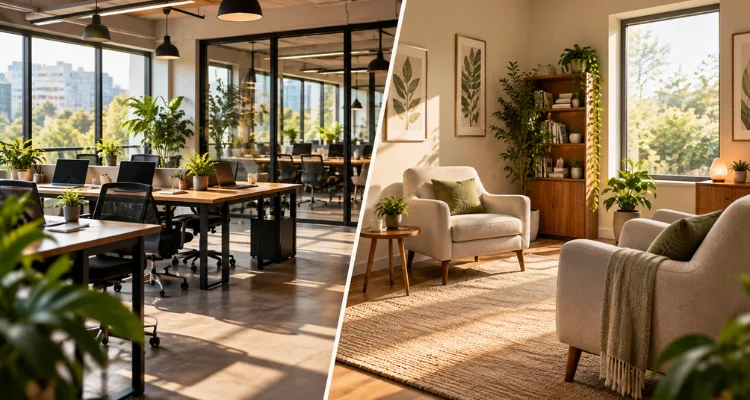
The room a client sits in shapes how safe they feel before you say a word. Research on therapy office design and its effect on client trust consistently finds that the physical environment influences comfort and openness during sessions. A coworking space designed for pitch meetings and laptop work sends a different signal than a room built around calm. Fluorescent lighting, exposed desks, and a lobby full of unrelated foot traffic aren’t neutral background details. They’re part of what a client experiences before the session even starts, and that first impression can either support the work or quietly work against it.
This matters most on a client’s very first visit. Someone walking into therapy or bodywork for the first time is often already anxious about the process itself, and a space that feels like a corporate lobby or a busy meeting hub adds friction they don’t need. A calmer setting does some of the work of putting a new client at ease before the session has even started.
Curious what a calming, purpose-built environment actually feels like?
Get in touch with our team to schedule a look at Wynhaven.
Community and referrals: who’s actually in the building
Community is one of coworking’s biggest selling points, and it’s a real benefit, just not always the right kind for a wellness practice. A coworking lounge might connect you with marketers, consultants, and startup founders, which is valuable for some businesses but rarely produces client referrals. A wellness-specific space puts you near complementary practitioners instead: a somatic therapist down the hall from a couples counselor, a nutritionist near a life coach. Those relationships can create more natural opportunities for professional collaboration and appropriate referrals.
Think about how referrals actually happen in practice. Regular interaction with complementary practitioners can make it easier to understand one another’s services and identify appropriate referral opportunities. Over a year, that difference compounds, because every practitioner in a wellness-aligned building is a potential referral source rather than someone entirely outside your field.
Coworking space vs wellness office space: side-by-side comparison
Here’s how the two options stack up across the factors that actually matter for client-facing work.
| Factor | Coworking space | Wellness office space |
|---|---|---|
|
Primary design purpose
|
Desks and business meetings
|
One-on-one client care
|
|
Privacy
|
Open plan, add-on soundproofing at best
|
Built-in, dedicated private rooms
|
|
Atmosphere
|
Business-casual, productivity-focused
|
Calming, designed for client comfort
|
|
Community
|
Mixed, unrelated businesses
|
Wellness-aligned peer network
|
|
Booking flexibility
|
Hot desks, day passes, meeting rooms
|
Suites, part-time blocks, memberships
|
|
Best for
|
Admin work, telehealth-only, non-client tasks
|
In-person therapy, bodywork, coaching sessions
|
Seeing where your practice actually fits?
Reach out to our team to tour a wellness suite built for client work at Wynhaven.
When coworking space might actually make sense
Coworking isn’t wrong for every wellness professional, and it’s worth being honest about where it fits. A coach running strategy calls entirely over video, a consultant doing paperwork between in-person sessions elsewhere, or a practitioner who only occasionally needs a professional address might get real value from a generic coworking membership. Some flexible workspaces offer healthcare-oriented or more private room options, which may be suitable when the necessary privacy safeguards are in place. The distinction is really about what happens in the room. If clients are physically present for confidential, vulnerable conversations, the space needs to be built around that from the start, not retrofitted around it.
It’s also worth asking how a space handles growth. A coworking membership that works fine for occasional admin days can start to feel mismatched the moment your caseload shifts toward more in-person sessions. Practitioners expecting a shift toward more in-person sessions may prefer starting in a wellness-specific space to avoid another move later.
What different practitioners prioritize in office space
Not every wellness professional weighs these factors the same way. Here’s what tends to matter most by practice type.
| Practitioner type | Top priority | Why it matters most |
|---|---|---|
|
Talk therapists and counselors
|
Soundproofing and confidentiality
|
Conversation is the entire session, so sound leakage is a direct privacy risk
|
|
Massage therapists and bodyworkers
|
Room setup and equipment access
|
Tables, linens, and storage needs differ from a typical desk-based office
|
|
Coaches and consultants
|
Flexible scheduling
|
Sessions are often shorter and more varied, so booking flexibility matters more than fixed hours
|
|
Nutritionists and wellness providers
|
Professional but approachable atmosphere
|
Clients are often making sensitive lifestyle disclosures, not just business decisions
|
Not sure what matters most for your specialty?
Connect with our team and we’ll help you match your practice to the right kind of space.
Making the switch: what to expect
Moving from a coworking membership to a wellness suite is usually simpler than people expect, especially since most coworking agreements are already short-term. Give your current space standard notice, confirm your new suite’s availability and move-in date, and time the switch around a natural break in your schedule rather than mid-caseload. Because wellness suites are typically furnished and move-in ready, there’s little setup beyond bringing your own materials and updating your address with clients and any relevant licensing or insurance records.
Let clients know about the change before it happens, especially if the new location shifts their commute. A short note explaining that the move is about creating a better, more private space for their sessions tends to land well, since it’s framed around their experience rather than a purely administrative update.
Finding the right fit for your practice
Coworking space and wellness office space solve different problems, and the right choice comes down to what actually happens in the room, not just the price per month. Wynhaven Wellness Community Center was built specifically for practitioners who need private, professional space for client work, on a nature-forward campus along the Forsyth-Dawson county line. Suites are flexible enough to fit a growing caseload without the overhead of a traditional lease, and the community around you is made up of practitioners, not unrelated businesses. If you’re deciding between generic coworking and a space built for the work you actually do, reach out to our team. We’ll help you find the fit that matches your practice.
Frequently asked questions
Is coworking space ever a good fit for therapists?
It can work for non-client-facing tasks like admin work or telehealth-only sessions, but most generic coworking spaces aren't built for the privacy in-person therapy requires. If you see clients in person, a dedicated wellness suite is generally the safer choice.
Are coworking spaces HIPAA compliant?
Some coworking operators market HIPAA-conscious features like soundproofing and telehealth rooms, but this varies widely by location and isn't guaranteed. Confirm the specific privacy features in writing before assuming any shared space meets your compliance needs.
Is wellness office space more expensive than coworking?
Pricing depends on the market and the specific space, but wellness suites are often comparable to coworking once you account for the privacy features many coworking spaces lack or charge extra for. Reach out to our team for current rates at Wynhaven.
Can I see clients in a coworking meeting room?
Technically yes, but most coworking meeting rooms are designed for business meetings, not confidential one-on-one sessions, and soundproofing varies widely. A room built specifically for client care is generally a better fit for ongoing therapy or bodywork sessions.
What makes a wellness suite different from a private office rental?
A wellness suite typically includes a built-in community of complementary practitioners and an atmosphere designed around client comfort, not just four walls and a door. That combination is harder to find in a standard private office rental.
Do wellness office spaces offer the same flexibility as coworking?
Many do, with part-time blocks, memberships, and flexible terms similar to what coworking offers. The difference is in what the space is actually built for, not necessarily in booking flexibility.
How do I know if my practice needs a coworking space or a wellness suite?
If most of your work happens over video or doesn't involve confidential client sessions, coworking may be enough. If you regularly see clients in person for therapy, bodywork or coaching, a purpose-built client-facing space may offer a better fit for privacy, atmosphere and practice needs.
How do I get started finding the right space for my practice?
Reach out to our team to talk through what your practice actually needs day to day, and we'll help you figure out whether a wellness suite at Wynhaven is the right fit.

Wendy Skinner, BSN, RN, VABC
Wendy writes about community wellness, practitioner support, and restorative spaces, drawing on 15+ years of clinical experience and her experience building environments that foster healing, rest, and connection.